
Evaluating systemic wellness requires a closer look at cellular mechanics. The efficiency of your cellular walls relies entirely on the quality of lipids you consume.
When your diet focuses on high-density, plant-based essential fatty acids, you directly influence how nutrients cross cell membranes. This structural approach to nutrition is known as the Lipid Permeability Grid.
By strategically selecting whole, plant-derived fats, you can stabilize your metabolic baseline and support efficient cellular function. This prevents systemic inflammation from interfering with your daily energy levels and long-term vitality.
To build a foundational understanding of how these lipids function in your daily meals, you need an organized system. Proper planning ensures you hit your targeted nutritional benchmarks consistently.
Access The Complete Plant-Based Recipe Library & Comprehensive Nutritional Resource Template Here
The Architecture of High-Density Plant Fats
Not all plant-based fats serve the same structural purpose in the body. To construct an efficient internal grid, your biological system requires a precise balance of specific lipid groups.
Monounsaturated fatty acids (MUFAs) and polyunsaturated fatty acids (PUFAs) form the core of this cellular defense. They replace the rigid, damaged fats found in processed modern diets.
Integrating these raw elements allows the body to manage internal fluid retention efficiently. It simultaneously maximizes the absorption speed of fat-soluble vitamins throughout the digestive tract.
Fluidity vs. Rigidity at the Cellular Level
Every tissue in your body relies on a phospholipid bilayer to maintain its shape and function. When this bilayer is compromised by poor nutrition, cellular walls become stiff and unresponsive.
Rigid membranes slow down metabolic signaling, leaving you feeling sluggish and fatigued. Conversely, an optimized grid keeps the cell walls fluid and highly receptive to nutrient absorption.
By focusing on raw, unrefined fat sources, you eliminate the metabolic clutter that hinders cellular communication. This keeps your biological pathways clear and performing at peak efficiency.
Key Components of the Lipid Density Matrix
To implement this structural framework effectively, we must look at the specific dense food sources that supply these clean lipids. Certain whole foods offer an unparalleled profile of pure fatty acids.
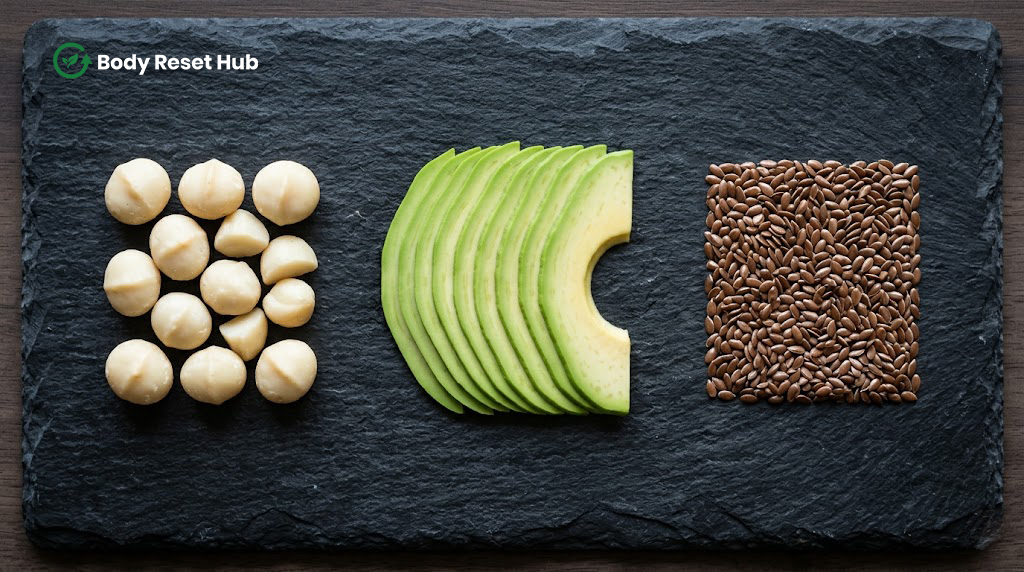
Raw, unroasted macadamia nuts offer a premium source of monounsaturated fats. They provide a highly stable form of clean fuel that resists oxidative stress inside the body.
Concurrently, micro-sliced raw avocado tissue delivers essential oleic acid packaged alongside natural dietary fiber. This unique combination ensures a slow, sustained release of clean metabolic energy.
Finally, whole flaxseed kernels supply a dense concentration of alpha-linolenic acid (ALA). This plant-based omega-3 fatty acid directly supports fluid balance and reduces cellular friction.
Eliminating Inflammatory Industrial Interference
A major obstacle to achieving true cellular permeability is the presence of industrial seed oils in modern foods. These refined oils undergo extreme chemical processing and high-heat extraction.
When damaged, oxidized fats are integrated into your biological architecture, the internal grid becomes sluggish. This creates systemic interference, leading to bloating and unpredictable energy drops.
Transitioning to a pure, plant-based nutrition strategy eliminates these disruptive variables entirely. It allows your digestive system to process clean molecules that actively support your metabolic baselines.
Access The Complete Plant-Based Recipe Library & Comprehensive Nutritional Resource Template Here
Calibrating Systemic Fluid and Metabolic Absorption Speed
A well-calibrated lipid grid does far more than just supply calories. It acts as an active regulator of internal osmotic pressure and fluid distribution.
If you struggle with water retention or slow digestion, your cellular gates may require structural reinforcement. Correcting your dietary fat ratios provides the exact raw materials needed for repair.
When your cell membranes achieve the correct density, your mitochondria can generate energy without processing toxic byproducts. This translates directly to sharper mental focus and sustained physical stamina.
Practical Integration for Daily Longevity
Adopting the principles of the Lipid Permeability Grid does not require complex routines or restrictive habits. It simply demands intentionality regarding the quality of raw ingredients you consume.
Begin by replacing refined cooking oils with whole food alternatives during your main meals. Add raw nuts to your breakfast or integrate fresh avocado slices into your midday green bowls.
Ensure that your seeds are consumed raw or freshly ground to protect their sensitive molecular bonds. Exposure to extreme heat can degrade the essential omega-3 strings your body relies on.
Over time, this consistent dietary shift optimizes your internal lipid architecture. It establishes a resilient metabolic baseline that protects your health from modern environmental stresses.

Constructing Your Resilient Nutritional Baseline
The journey to long-term vitality is built on a foundation of structural integrity. By understanding how fatty acid density impacts your cells, you elevate your daily nutrition strategy.
Consistently choosing high-density, plant-based fats ensures your system remains free from inflammatory disruption. It gives your body a clean, reliable, and highly efficient blueprint for health.
To make this transition seamless, utilize verified guides that outline precise ingredient ratios and meal layouts. Having a structured framework removes the guesswork from your weekly meal preparation.
Access The Complete Plant-Based Recipe Library & Comprehensive Nutritional Resource Template Here