
Have you ever sat down for a healthy Mediterranean lunch or a quick dinner bowl, eaten your food in a hurry while answering work emails, only to feel your stomach swell up like a tight balloon thirty minutes later? Millions of people spend time preparing nutritious meals with fresh vegetables and wholesome ingredients, yet they still suffer from painful gas, upper belly tightness, and severe post-meal bloating. A major reason for this daily stomach irritation is not just what you put on your plate, but how you eat it. When you swallow your food rapidly without chewing properly, or eat while stressed and distracted, you force your stomach to deal with large, uncrushed food pieces and swallowed air pockets. This hurried way of eating overburdens your stomach acids, slows down your intestinal movement, and causes even the healthiest fresh salads to ferment in your gut, leaving you with an uncomfortable, swollen belly that ruins your afternoon productivity.
Welcome back to Body Reset Hub, your clean, simple, and honest online space for real whole-food recipes and practical everyday health advice. Today, we are focusing on a simple, zero-cost daily mealtime practice that stops bloating before it even starts: the mindful eating habits for bloating method. This practical guide explores how changing how you eat can support your stomach. By choosing to slow down your pace, chew your fresh greens thoroughly, and focus on your meal sitting quietly at a table, you give your digestive enzymes the exact physical environment they need to break down fresh plant fibers smoothly, keeping your lower abdomen completely flat, light, and comfortable.
Before we explore the practical daily habits to calm your mealtime pace and support your digestive tract at home, you can claim your copy of our complete plant-based meal templates right here to keep your weekly food routines simple and organized:
Access The Complete Plant-Based Recipe Library & Comprehensive Nutritional Resource Template Here
Changing how you interact with your food during breakfast, lunch, and dinner is one of the easiest and most powerful ways to protect your gut lining and prevent uncomfortable gas buildup. Let us take a closer look at why rushed, distracted eating causes severe stomach swelling and how practicing mindful meal habits keeps your digestive system working smoothly every single day.
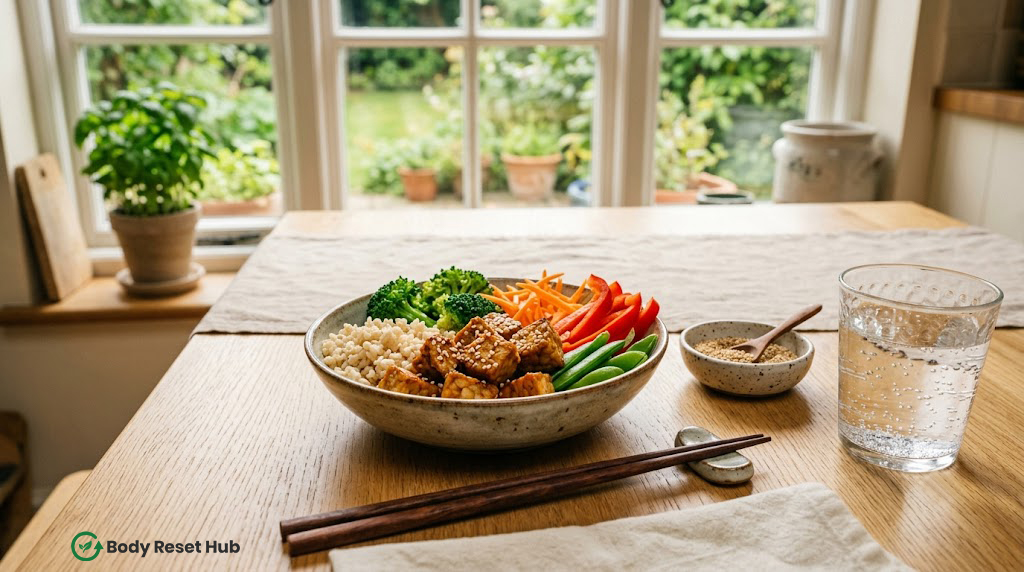
Why Rushed Eating and Swallowed Air Cause Severe Belly Bloating
To understand why your stomach feels so much lighter when you change your eating pace, it helps to look at how your mouth, esophagus, and stomach work together. Digestion is a two-step process: mechanical breakdown (chewing with your teeth) and chemical breakdown (stomach acids and bile enzymes).
When you rush through your lunch or eat while typing on your computer, your digestive system faces several physical struggles:
- Large Unchewed Food Masses: Swallowing large chunks of raw vegetables or whole nuts forces your stomach muscles to churn under high pressure for hours, leading to heavy stomach acid burn.
- Swallowed Air Pockets (Aerophagia): Eating fast or talking while chewing traps large amounts of air in your food pipe, which travels straight down into your intestines to form painful gas bubbles.
- Low Parasympathetic Activation: When you eat under work stress, your body stays in a “fight-or-flight” state. This reduces blood flow to your stomach, shutting down natural digestive secretions and causing food to sit stagnant in your gut.
By following the clean, unrefined whole-food practices we share here on Body Reset Hub and bringing calm mealtime habits into your daily routine, you protect your physical body from these unnecessary daily digestive struggles.
How Mindful Eating Habits Calm Your Digestive System Naturally
Practicing calm mealtime habits creates an ideal environment for your gut lining and lower intestines. Taking a moment to look at your food, sitting upright at a dining table, and chewing each bite intentionally transforms how your stomach processes plant nutrients. Here is how changing your meal habits helps your gut thrive:
1. Thorough Chewing Pre-Digests Plant Fibers
Your teeth are designed to break down tough plant cell walls. Chewing a fresh Mediterranean salad containing leafy greens, crisp fennel, and pine nuts into a smooth paste mixes the food thoroughly with salivary amylase enzymes, ensuring your stomach acid can process the nutrients without producing excess gas.
2. Triggers Optimal Stomach Acid and Bile Secretion
Looking at your colorful meal and smelling fresh basil or balsamic glaze sends an immediate nerve signal down your vagus nerve to your stomach lining. This signal prompts your stomach and gallbladder to release fresh hydrochloric acid and bile, preparing your gut to break down fats and proteins seamlessly.
3. Prevents Overeating and Midday Sluggishness
Eating slowly allows your stomach to send fullness signals to your brain, which takes about twenty minutes. By tuning into your body’s natural hunger cues, you avoid overeating, preventing that heavy, stuffed feeling that causes afternoon drowsiness and stomach stretching.
If you want an organized, stress-free way to build clean whole-food meals using gut-friendly vegetables, healthy fats, and light dressings, check out our digital cookbook library right now:
Access The Complete Plant-Based Recipe Library & Comprehensive Nutritional Resource Template Here
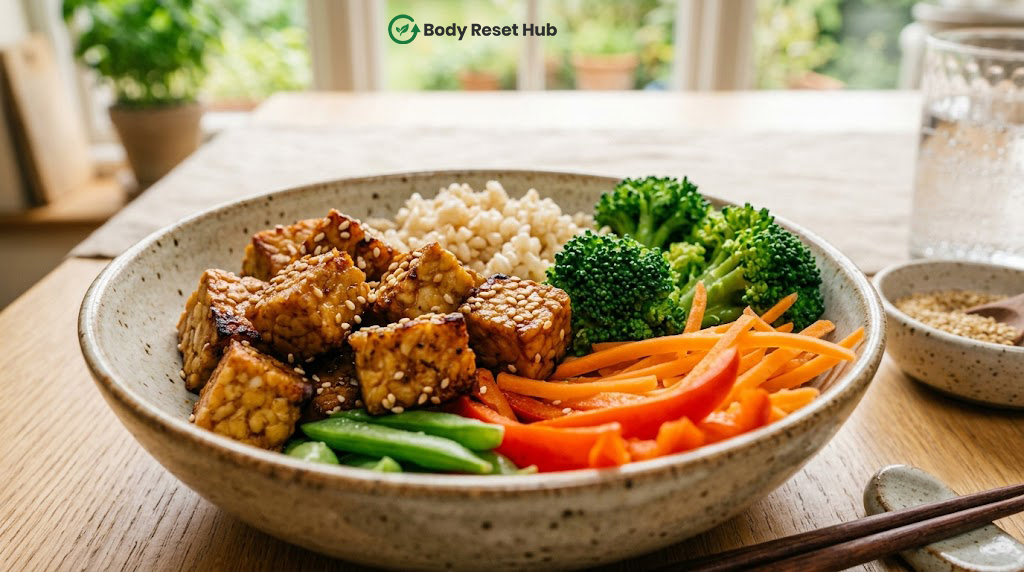
Simple Daily Habits for a Mindful, Bloat-Free Meal
You do not need any complicated equipment or strict meal rules to practice mindful eating at home or in your office. Making a few small adjustments to your daily meal environment is all it takes to keep your stomach relaxed and happy.
Practical Habits to Follow Today:
- Sit at a Real Table: Always sit upright at a dining table or desk without looking at your phone or television screen.
- Take 3 Deep Breaths Before Eating: Take three slow breaths through your nose before your first bite to signal your nervous system to rest and digest.
- Put Your Fork Down Between Bites: Set your fork or spoon down on the napkin while chewing each bite completely before picking it up for the next bite.
- Sip Water Slowly: Drink small sips of room-temperature water during your meal, avoiding gulping large amounts of cold water that dilute stomach acids.
Easy Mealtime Steps:
- Set Your Space: Plate your meal neatly on a clean ceramic dish. Lay out a fork, knife, and a glass of fresh water on a wooden table, matching the clean setup shown in our primary picture.
- Pause and Appreciate: Take a 10-second pause to admire the bright colors of your fresh salad greens, tomatoes, and pine nuts before picking up your fork.
- Chew Each Bite 20 Times: Place a bite of fresh greens in your mouth. Chew slowly 20 to 30 times until the food is completely soft before swallowing.
- Breathe and Rest: Rest your hands on the table between bites. Enjoy the calm pace and pay attention to how your stomach feels as it fills up comfortably.
- Finish Calmly: Take five quiet minutes after finishing your meal to sit comfortably before jumping back into your work tasks!
What You Notice When You Change How You Eat Daily
When you make mindful meal habits a consistent part of your daily breakfast, lunch, and dinner routine, your physical body responds with clear, noticeable improvements within just a few days:
- A Light, Completely Flat Stomach: You will notice a dramatic decrease in post-meal bloating and trapped gas, leaving your lower abdomen feeling light, calm, and flat.
- Steady All-Day Mental Energy: Digesting thoroughly chewed, calm meals requires far less physical energy, keeping your brain alert and focused through long work hours.
- Smooth, Regular Bowel Movements: Activating your body’s rest-and-digest state encourages healthy intestinal contractions, supporting effortless daily waste elimination.
To ensure you never run out of easy, clean, and unrefined ideas to fuel your body correctly through every season, explore our complete plant-based resource before you go:
Access The Complete Plant-Based Recipe Library & Comprehensive Nutritional Resource Template Here
Final Thoughts
Real health, a flat belly, and effortless digestion do not come from rushing through quick meals, taking synthetic digestive pills, or eating while stressed at your work desk. They come from returning to simple, natural daily habits—choosing fresh whole foods, sitting down calmly, and giving your body the time it needs to digest every bite. By taking a few extra minutes to practice these mindful eating habits for bloating during your daily meals, you give your stomach the exact care and respect it needs to stay clear, light, and fully energized. Keep your mealtime routines simple, choose real whole foods, and let clean natural habits power your day.