
Have you ever finished a filling lunch or dinner, sat back down at your office desk or on your sofa, and felt your lower back lock up while your stomach felt tight, swollen, and filled with trapped gas? Millions of working professionals struggle with physical discomfort right after eating. Sitting in a slouched chair with a full stomach compresses your internal digestive organs, reduces blood flow to your gut walls, and puts heavy pressure on your lumbar spine. When you stay motionless after meals, your stomach acid struggles to move food smoothly into your lower intestines, leading to painful upper belly tightness, sour acid burps, and a heavy, stiff feeling that ruins your energy for the rest of the day.
Welcome back to Body Reset Hub, your clean, simple, and honest online space for practical movement habits and everyday health guidance. Today, we are exploring a soft, restoring movement habit that requires no gym equipment or intense physical effort: the seated forward fold post meal habit. Learning how this gentle stretch releases tension in your lower back and core can transform how your body feels after eating. By sitting comfortably on a soft rug in loose clothing, extending your legs, and hinging forward gently at your hips, you lengthen tight lower back muscles, release abdominal pressure, and help your gut digest food without any stiffness or discomfort.
Before we explore how soft forward bending relaxes your back and supports digestion, you can claim your copy of our complete plant-based nutrition and lifestyle guides right here to build clean daily habits:
Access The Complete Plant-Based Recipe Library & Comprehensive Nutritional Resource Template Here
Choosing to give your spine and abdomen a gentle two-minute stretch after eating instead of sitting slouched over a phone or computer screen is one of the easiest ways to protect your back muscles and support comfortable post-meal digestion. Let us take a closer look at why sitting still after eating causes back tightness and how a seated forward fold post-meal habit refreshes your body every single day.
Why Sitting Slouched After Meals Strains Your Back and Gut
To understand why a simple seated fold feels so instantly relieving after a meal, it helps to look at how your posture affects your internal organs. Slouching in a chair after eating pushes your ribcage downward into your abdominal cavity, squeezing your stomach and restricting diaphragm movement.
When you stay hunched over at your desk right after eating lunch or dinner, your body faces several physical challenges:
- Lumbar Spine Compression: Sitting with a full stomach causes your lower back curve to flatten, putting continuous strain on your lumbar discs and back tendons.
- Intestinal Pressure and Trapped Gas: Compressing your abdomen creates physical friction along your digestive tract, slowing down gastric emptying and trapping gas bubbles in your lower gut.
- Reduced Circulation to Core Muscles: Lack of post-meal movement starves your lower abdominal muscles and hip flexors of fresh, oxygenated blood flow.
By following the clean, practical daily habits we share here on Body Reset Hub and making time for a brief, relaxed stretch after eating, you protect your body from these unnecessary daily physical struggles.
How Forward Hinging, Leg Extension, and Slow Breathing Support Your Body
Taking two to three minutes to sit on a rug and fold forward gently allows your spinal vertebrae to decompress naturally. You do not need extreme athletic flexibility or touch your toes to gain the full physical benefits of this posture. Here is how a seated forward fold post-meal habit helps your body thrive:
1. Lengthens Tight Lumbar Muscles and Relieves Back Strain
Hinging forward at your hips gently lengthens the erector spinae muscles along your lower back. This smooth elongation releases built-up muscle tension from long hours of desk sitting, relieving lower spine pressure instantly.
2. Gently Massages Abdominal Organs to Support Digestion
Leaning your torso softly toward your thighs creates a light, natural compression against your digestive tract. This gentle pressure stimulates intestinal peristalsis—the natural wave-like muscle contractions that move food smoothly through your stomach and intestines.
3. Slow Nasal Exhalations Calm Stress and Muscle Tension
Pairing your forward fold with deep, slow breaths through your nose signals your nervous system to relax. Lowering stress levels after meals improves blood flow to your gut lining, preventing digestive cramps and allowing your body to process nutrients efficiently.
If you want an organized, simple way to pair your daily post-meal movement habits with clean whole-food meals and gut-friendly recipes, check out our resource library right now:
Access The Complete Plant-Based Recipe Library & Comprehensive Nutritional Resource Template Here
Simple Steps to Practice Your Seated Forward Fold Post Meal Habit
You do not need a yoga studio or flexible hamstrings to practice this post-meal habit at home or in your office space. Performing this movement gently while breathing deeply makes this routine comfortable and effortless for anyone.
What You Need for This Routine:
- 2 to 3 minutes of quiet post-meal time
- A soft rug, carpet, or woven jute mat on the floor
- Loose, non-restrictive clothing around your waist
- Zero special exercise gear required
Easy Step-by-Step Instructions:
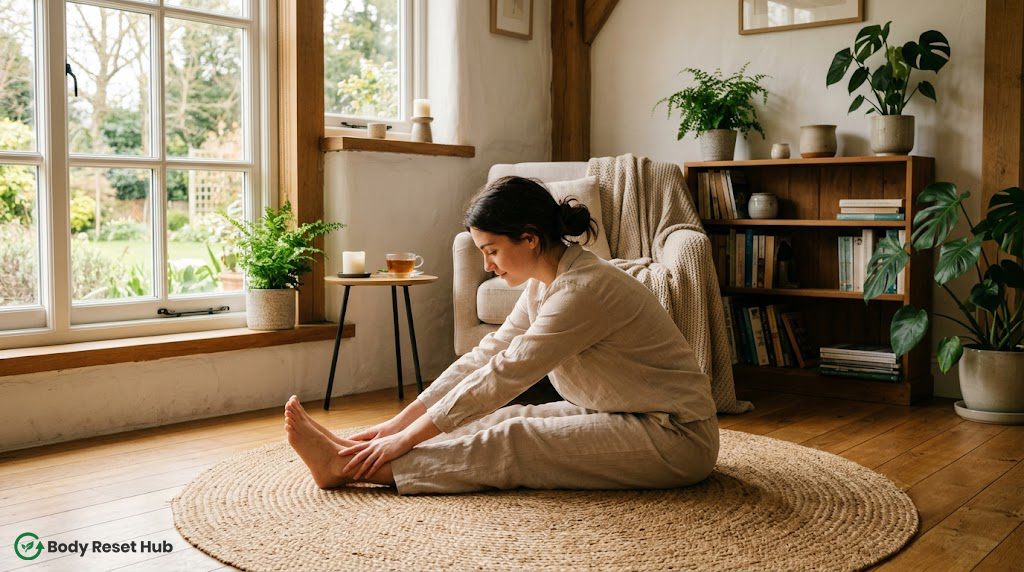
- Sit Comfortably on Your Rug (30 Seconds): Sit up tall on a woven jute rug or soft carpet with your legs extended straight out in front of you, as shown in our primary picture. Bend your knees slightly if your hamstrings feel tight.
- Inhale and Lengthen Your Spine (30 Seconds): Inhale deeply through your nose, reaching the top of your head toward the ceiling to create space between your vertebrae.
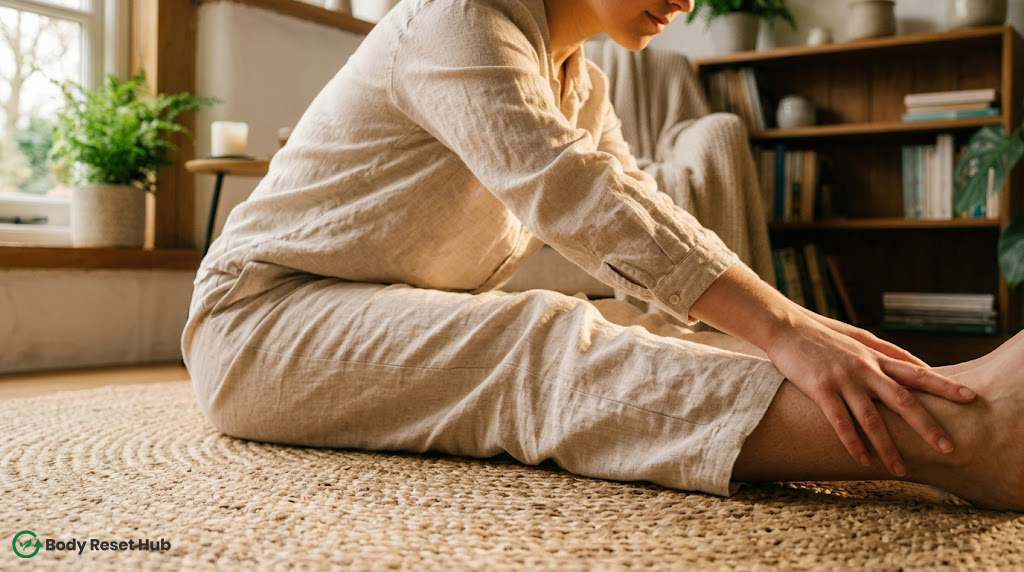
- Hinge Forward from Your Hips (1 Minute): Exhale slowly as you bend forward from your hips—not your lower back. Rest your hands comfortably on your shins, ankles, or feet wherever they reach naturally without straining.
- Breathe Deeply into Your Lower Back (1 Minute): Hold this gentle folded position for 60 to 90 seconds. Take long, slow belly breaths, feeling your lower back expand gently with each breath.
- Sit Up Slowly and Relax: Inhale as you slowly roll your spine back up to an upright sitting position. Stand up feeling light, flexible, and completely comfortable in your stomach!
What You Notice When You Stretch After Meals Daily
When you make a gentle seated forward fold a regular habit after your daily meals, your physical body responds with clear, noticeable improvements within just a few days:
- A Relaxed, Bloat-Free Stomach: You will notice zero post-meal belly tightness, heavy upper gut pressure, or trapped gas, as gentle forward folding supports smooth digestion.
- Flexible, Tension-Free Lower Back: Releasing spinal tension after meals prevents stiffness, keeping your back feeling comfortable through long work hours.
- Sustained Post-Meal Physical Stamina: Improving post-meal circulation prevents afternoon fatigue and brain fog, keeping your mind alert and productive.
To ensure you have all the clean nutrition tools, whole-food recipe ideas, and daily health habits needed to fuel your body correctly through every season, explore our complete resource before you go:
Access The Complete Plant-Based Recipe Library & Comprehensive Nutritional Resource Template Here
Final Thoughts
Real daily physical comfort, back relief, and smooth digestion do not come from sitting slouched in heavy chairs after eating, taking synthetic digestive pills, or ignoring lower back tightness. They come from returning to simple, natural daily habits—taking two minutes after your meals to sit on a soft rug, folding forward gently to stretch your back, and breathing deeply. By making this seated forward fold post meal habit a regular part of your daily routine, you give your spine, stomach, and nervous system the exact gentle care they need to stay flexible, light, and fully energized. Keep your daily routines simple, move your body gently after eating, and let clean daily habits power your day.