
Have you ever spent six to eight hours straight sitting in your office chair, only to stand up at the end of the workday with a sharp ache in your lower back, tight hip joints, and swollen ankles? Millions of working adults deal with chronic physical fatigue caused by long hours of continuous desk sitting. When you stay motionless in a chair for hours, your glute muscles turn inactive, your spinal discs compress under heavy body weight, and blood flow to your legs slows down. Lacking physical movement during work hours leads directly to severe neck tightness, poor posture, 3 PM brain fog, and an overall lack of stamina that leaves you feeling exhausted before your workday is even finished.
Welcome back to Body Reset Hub, your clean, simple, and honest online space for practical movement habits and everyday health advice. Today, we are exploring a powerful workplace habit that protects your spine and keeps your energy high throughout long office hours: the standing desk alignment practice routine. Learning how to alternate between sitting and standing to stay active all day is one of the easiest ways to keep your body feeling light and energized. By making a simple rule to raise your adjustable wooden desk, kick off your shoes, and stand tall for 20 to 30 minutes every hour, you decompress your lower spine, engage your core muscles, boost blood circulation, and keep your focus sharp without quitting your desk tasks.
Before we walk through the easy steps to set up your desk height, adjust your monitor alignment, and balance your daily work stance at home or in the office, you can claim your copy of our complete plant-based nutrition and lifestyle guides right here to build clean daily habits for your workday routine:
Access The Complete Plant-Based Recipe Library & Comprehensive Nutritional Resource Template Here
Choosing to alternate between sitting and standing at your wooden desk instead of staying glued to a leather office chair all day is a brilliant, effortless shift to protect your spine and maintain steady physical focus. Let us look closer at why continuous sitting causes back tightness and how a standing desk alignment practice restores physical ease to your entire body every single day.
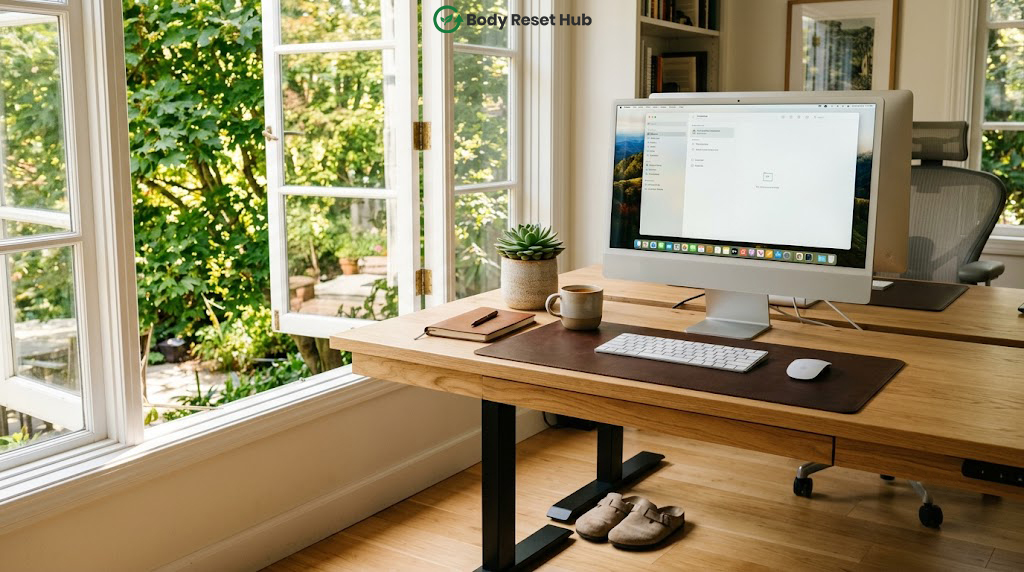
Why Sitting for Hours Stiffens Your Lower Back and Hip Flexors
To understand why standing up at your desk feels so instantly relieving to your lower body, it helps to look at how body posture affects spinal nerve channels. Your body was built to move regularly throughout the day, not remain locked in a right-angle seated position.
When you spend your entire workday seated without changing positions, your body faces several physical challenges:
- Continuous Lumbar Disc Pressure: Seated posture increases mechanical pressure on your lower lumbar discs, reducing blood flow to your back muscles and causing stiffness.
- Shortened Hip Flexors and Glute Inactivity: Keeping your knees bent for hours shortens tight hip flexors and turns off glute muscle firing, leading to severe lower back pain when walking.
- Sluggish Blood Flow in Lower Legs: Sitting still allows blood and lymphatic fluids to pool in your ankles and feet, causing leg heaviness, tightness, and physical fatigue.
By following the clean, practical daily habits we share here on Body Reset Hub and making time to alternate your work posture, you protect your body from these unnecessary daily physical struggles.
How Posture Adjustments, Leg Weight Shifts, and Standing Height Boost Energy
Using an adjustable wooden standing desk allows your spine to regain its natural S-curve alignment while you continue typing, making phone calls, or reviewing documents. You do not need hard exercise routines or gym sessions during work hours to stay healthy. Here is how a standing desk alignment practice helps your body thrive:
1. Spinal Decompression Relieves Back Pain Fast
Standing tall allows your body weight to distribute evenly through your hips, legs, and feet. Unfolding your hip joints decompresses tightly packed lower back discs, allowing oxygenated blood to flow into tight back muscles and melting away lower spine aches.
2. Micro-Movements Keep Leg Muscles Active and Toned
When standing at your desk, your calves, hamstrings, and core muscles make constant tiny adjustments to keep you balanced. These light micro-movements pump blood smoothly back up toward your heart, preventing leg swelling and keeping your body active all afternoon.
3. Upright Posture Increases Lung Capacity and Mental Focus
Standing upright opens your chest cavity and relaxes your diaphragm. Taking deeper nasal breaths delivers richer oxygen to your brain, eliminating 2 PM mental drowsiness and keeping your work productivity steady without relying on extra cups of coffee.
If you want an organized, simple way to pair your ergonomic workplace habits with clean whole-food meals, energy-rich snacks, and easy daily routines, check out our digital resource library right now:
Access The Complete Plant-Based Recipe Library & Comprehensive Nutritional Resource Template Here
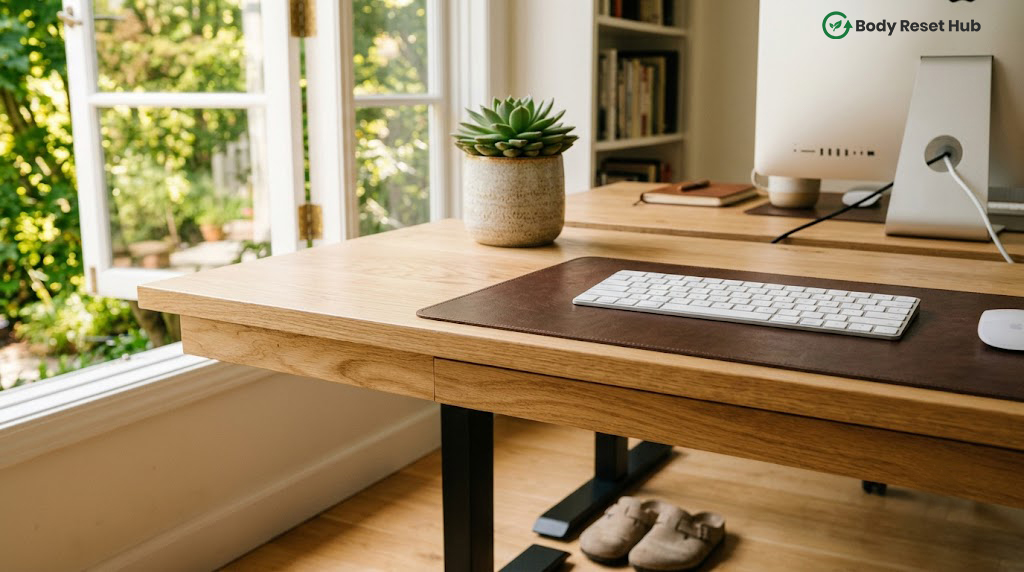
Simple Steps to Practice Your Standing Desk Alignment Routine
You do not need complicated equipment or strict rules to master this standing desk habit at home or in an office. Setting up your monitor height correctly and shifting your weight smoothly makes standing comfortable and natural.
What You Need for This Routine:
- 1 adjustable wooden standing desk or desk riser
- 1 comfortable pair of flat shoes or bare feet
- A monitor placed at eye level
- 30 minutes of standing time every hour
Easy Step-by-Step Instructions:
- Set Up Desk and Monitor Height: Raise your adjustable wooden desk until your elbows rest at a 90-degree angle on your desk pad. Position your computer monitor so the top third of the screen sits right at eye level, as shown in our primary picture.
- Kick Off Heel Shoes: Stand comfortably in flat, cushioned shoes or bare feet to allow your foot arches to ground evenly on the floor.
- Align Your Spine and Shoulders: Stand tall, roll your shoulders back and down, pull your belly button gently inward, and unlock your knees so they stay relaxed, not stiff.
- Practice the 30-30 Rule: Spend 30 minutes working in a standing position, then lower your desk to sit for 30 minutes. Alternate this pattern throughout your workday.
- Shift Weight Softly: While standing, shift your body weight gently from your right foot to your left foot every few minutes to keep your leg muscles relaxed and blood moving freely!
What You Notice When You Alternate Sitting and Standing Daily
When you make a standing desk alignment practice a regular part of your daily work routine, your physical spine and mental focus respond with clear, noticeable improvements within just a few days:
- Zero Lower Back Aches or Hip Tightness: You will notice a complete disappearance of lower back stiffness, shoulder knots, and neck pain after long computer sessions.
- A Light, Swelling-Free Lower Body: Regular leg muscle activity pumps fluid upward, keeping your ankles, feet, and calves feeling light and comfortable all day.
- Sharp, Unbroken Afternoon Focus: Standing upright increases oxygen flow to your brain, eliminating afternoon brain fog and keeping your mind clear through long work meetings.
To ensure you have all the clean nutrition tools, whole-food recipe ideas, and daily health habits needed to fuel your body correctly through every season, explore our complete resource before you go:
Access The Complete Plant-Based Recipe Library & Comprehensive Nutritional Resource Template Here
Final Thoughts
Real workday energy, back relief, and physical stamina do not come from sitting motionless in an office chair for eight hours, taking synthetic pain-relief pills for neck tightness, or drinking heavy caffeinated shots to force your brain awake. They come from returning to simple, natural daily habits—raising your desk, standing up tall, alternating between sitting and standing, and letting your body move naturally throughout your workday. By making this standing desk alignment practice a regular part of your daily routine, you give your spine, hips, and blood vessels the exact gentle movement and care they need to stay flexible, light, and fully energized. Keep your daily work routines simple, stand up often, and let clean daily habits power your health.