
Have you ever climbed into bed at night after an exhausting day at work, pulled the blankets up, and laid there awake with a racing pulse, shallow chest tightness, and a mind that refuses to quiet down? Millions of working adults struggle with nighttime rest and nervous system tension every single day. When you spend your entire day rushing through tight work deadlines, staring at bright computer displays, and taking rapid, shallow chest breaths, your body stays locked in a state of high alarm. Going straight from a busy workspace to bed without taking time to calm your breathing keeps stress hormones circulating through your bloodstream. This poor evening routine leads directly to restless tossing and turning, tight stomach cramps, morning fatigue, and a heavy head that makes waking up the next day completely exhausting.
Welcome back to Body Reset Hub, your clean, simple, and honest online space for practical health habits and daily lifestyle guidance. Today, we are exploring a deeply relaxing evening breathing habit that costs zero money and takes under five minutes: the mindful diaphragmatic resting practice. Discovering how to slow down your breathing rate to support restful evening routine is one of the most effective ways to switch your body into deep rest mode. By lying flat on your back on a soft floor mat, resting a gentle weighted fabric eye pillow over your closed eyes, and taking slow, deep belly breaths that expand your diaphragm, you lower your heart rate, release tightness from your chest and stomach, and prepare your nervous system for sound, unbroken sleep.
Before we walk through the simple steps to practice deep diaphragmatic breathing and set up your peaceful resting space at home, you can claim your copy of our complete plant-based nutrition and lifestyle guides right here to build clean daily habits for your evening routine:
Access The Complete Plant-Based Recipe Library & Comprehensive Nutritional Resource Template Here
Choosing to spend five quiet minutes lying flat on your floor mat practicing slow belly breathing before bed instead of scrolling through noisy social media feeds is a brilliant, effortless shift to protect your sleep quality and lower evening stress. Let us take a closer look at why shallow chest breathing keeps you awake and how a mindful diaphragmatic resting practice restores calm comfort to your body every single night.
Why Shallow Chest Breathing and Late-Night Stress Ruin Your Sleep
To understand why deep belly breathing feels so instantly soothing when lying on your back, it helps to look at how your diaphragm interacts with your vagus nerve. Your vagus nerve runs from your brainstem down through your neck, chest, and stomach, controlling your heart rate and digestive functions.
When you spend your evenings taking shallow chest breaths while stressing over work tasks, your body faces several physical challenges:
- Persistent Adrenaline and Cortisol Release: Rapid chest breathing signals danger to your brain, keeping your heart rate elevated and delaying natural melatonin sleep secretion.
- Intercostal Muscle Tightness and Chest Pressure: Breathing only into your upper chest strains small ribs and shoulder muscles, causing tightness around your upper back.
- Abdominal Cramping and Slow Night Digestion: Compressing your stomach wall during shallow breathing prevents smooth intestinal movement, leading to trapped gas and evening bloating.
By following the clean, practical daily habits we share here on Body Reset Hub and making time for slow diaphragmatic resting before bed, you protect your body from these unnecessary daily physical struggles.
How Deep Diaphragm Movement, Eye Pillows, and Floor Lying Calm You
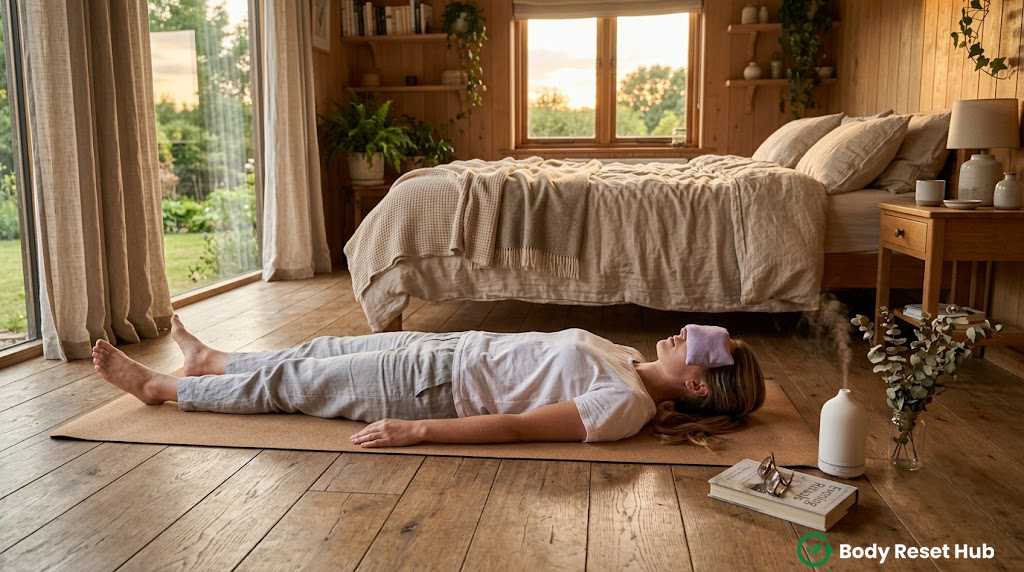
Lying completely flat on a firm floor mat allows your spine to rest in a neutral position while your abdominal muscles loosen completely. You do not need any complex meditation techniques or strict postures to relax your breathing. Here is how a mindful diaphragmatic resting practice helps your body thrive:
1. Diaphragm Expansion Activates Your Parasympathetic Nerve
Taking deep breaths that expand your lower belly pulls your large diaphragm muscle downward. This gentle movement stimulates your vagus nerve, signaling your brain to drop your heart rate, lower blood pressure, and transition your body into deep physical rest.
2. Light Eye Pillow Pressure Triggers the Oculocardiac Reflex
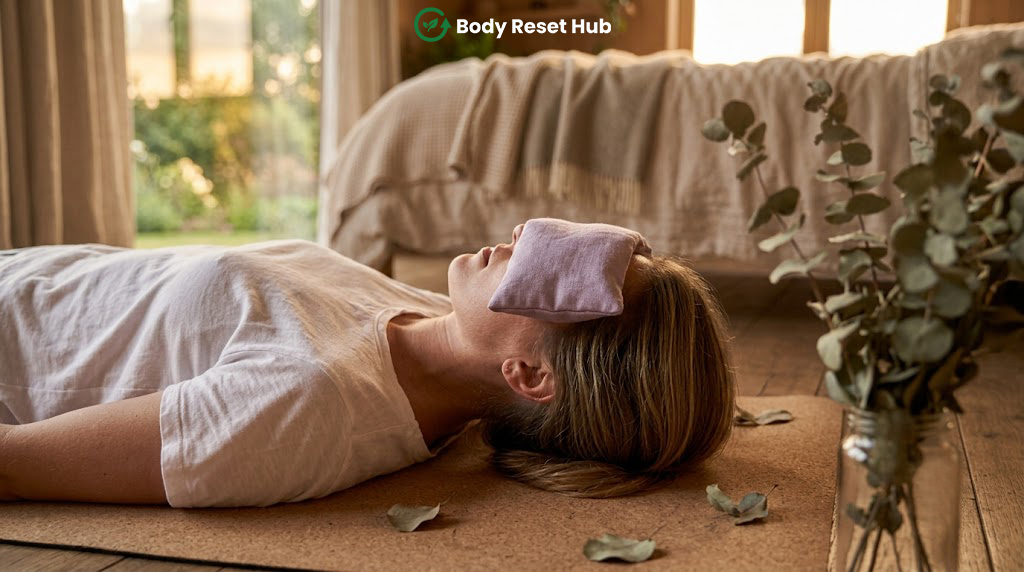
Placing a soft weighted fabric eye pillow over your closed eyelids exerts gentle pressure on your optic nerves. This safe physiological pressure activates your oculocardiac reflex, instantly slowing your pulse and blocking out ambient light to quiet mental activity.
3. Slow Nasal Inhalations Increase Oxygen Flow to Cells
Breathing slowly through your nose warms and filters incoming air while increasing nitric oxide production. Richer oxygen delivery relaxes tight blood vessels, melts away forehead headaches, and releases physical tension from your stomach and neck.
If you want an organized, simple way to pair your quiet evening resting habits with clean whole-food dinners, soothing herbal teas, and easy daily routines, check out our digital resource library right now:
Access The Complete Plant-Based Recipe Library & Comprehensive Nutritional Resource Template Here
Simple Steps to Practice Your Mindful Diaphragmatic Resting Routine
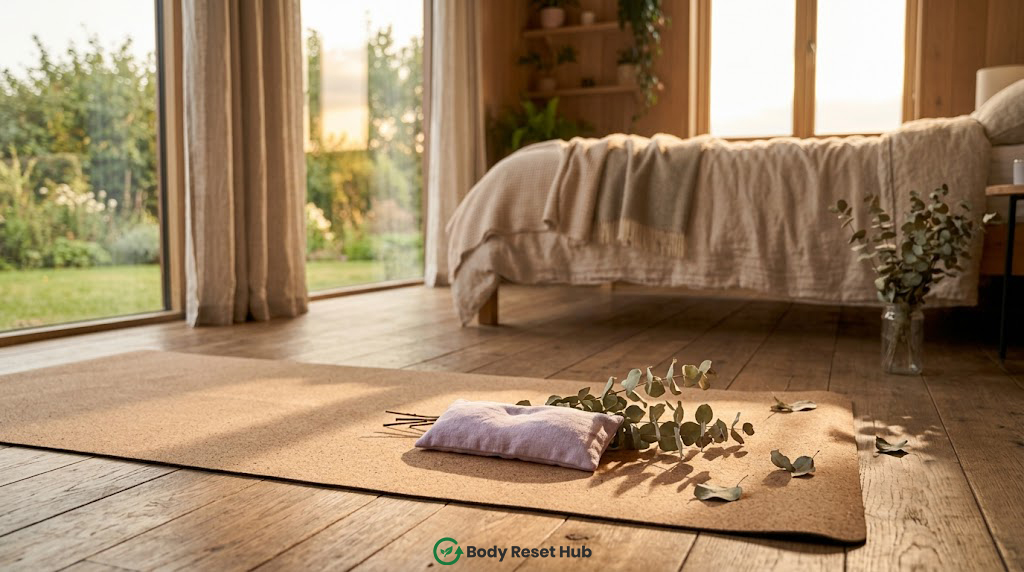
You do not need an elaborate home setup or expensive gear to practice diaphragmatic breathing at home. Resting on a cork mat or soft rug near your bed with an eye pillow takes under five minutes and creates a peaceful evening ritual.
What You Need for This Routine:
- 1 soft cork mat or carpeted floor space
- 1 light fabric eye pillow or soft folded cloth
- 5 minutes of quiet pre-bedtime time
- Zero digital screens or loud noises
Easy Step-by-Step Instructions:
- Prepare Your Floor Space: Lay your cork mat on a clean wooden floor near your bed, as shown in our primary picture. Turn off bright overhead lights and keep the room dim.
- Lie Flat and Place Eye Pillow: Lie down comfortably on your back with your legs extended or knees slightly bent. Place your fabric eye pillow gently over your closed eyes to block out light.
- Place Hands on Your Lower Stomach: Rest your palms gently over your lower belly, right below your navel, so you can feel your abdomen rise and fall.
- Practice 4-7-8 Diaphragmatic Breathing: Inhale slowly through your nose for 4 seconds, feeling your stomach lift your hands. Hold your breath gently for 2 seconds. Exhale slowly through your mouth for 6 to 7 seconds, feeling your belly fall.
- Repeat for 5 Minutes and Rest: Continue this slow, rhythmic belly breathing for 5 minutes. Remove your eye pillow, roll to your side, and slide directly into bed feeling completely relaxed and ready for sleep!
What You Notice When You Practice Slow Breathing Daily
When you make a 5-minute diaphragmatic resting practice a regular part of your pre-bedtime routine, your physical body and mind respond with clear, noticeable improvements within just a few days:
- Fast, Effortless Sleep Onset: You will notice zero late-night anxiety or tossing and turning, as slow belly breathing signals your brain to clear out stress hormones.
- A Soothed Stomach and Flat Belly: Relaxing your abdominal muscles encourages smooth night digestion, eliminating evening gas, tightness, and lower belly cramps.
- A Relaxed Neck, Shoulders, and Forehead: Releasing upper chest breathing pressure melts away muscle knots, leaving your upper body feeling light, supple, and comfortable.
To ensure you have all the clean nutrition tools, whole-food recipe ideas, and daily health habits needed to fuel your body correctly through every season, explore our complete resource before you go:
Access The Complete Plant-Based Recipe Library & Comprehensive Nutritional Resource Template Here
Final Thoughts
Real nighttime calm, deep sleep, and daily physical vitality do not come from scrolling on your phone in bed, taking synthetic sleep aids, or ignoring chest tightness after a stressful day. They come from returning to simple, natural daily habits—lying down flat on a soft floor mat, resting an eye pillow over your eyes, slowing down your breathing rate with your diaphragm for five minutes, and letting your nervous system unwind naturally. By making this mindful diaphragmatic resting practice a regular part of your evening routine, you give your brain, heart, and stomach the exact gentle care and peace they need to rest deeply and wake up fully energized. Keep your daily routines simple, breathe deeply every evening, and let clean daily habits power your health.