
Have you ever noticed that after enjoying a warm plate of cooked potatoes, yams, or rice for lunch, you get hit by an intense wave of sleepiness just an hour later? You want to maintain great daily habits, prepare home meals, and stay productive at your desk, but traditional comfort foods leave you feeling completely heavy, tired, and unfocused. Here at Body Reset Hub, we meet so many everyday people, busy professionals, and food lovers who face this exact annoying afternoon energy drop. You might assume that all carbohydrates are bad for your wellness, or that your body is naturally lazy after lunch. However, the true biological explanation behind this heavy crash is the way hot starches are immediately absorbed into your bloodstream. When you eat stews and root crops straight from the hot stove, your digestive system rapidly converts those loose starches into simple sugars. By focusing on natural starch cooling methods, you can completely change your metabolic health. Learning why letting cooked root crops rest changes how body handles midday sugar spikes is the ultimate simple secret to stabilizing your physical wellness and protecting your body reset goals easily.
Learning to structure your everyday meals with cooled whole foods and understanding how starch structures change shape protects your system from sudden glucose overloads. Real health management requires simple, natural kitchen steps that change how food breaks down inside your stomach without requiring you to stop eating your favorite root vegetables.
If you want a clear, beautifully organized master collection of whole-food meal prep ideas and want to access a massive library of high-mineral, smart recipes to upgrade your routine today, you can check the link block right below:
Access The Complete Plant-Based Recipe Library & Comprehensive Nutritional Resource Template Here
The Biological Hazard of Hot, Fast-Absorbing Starches
To understand why changing the temperature of your root vegetables before eating alters your daytime stamina so deeply, it helps to look at the chemistry of a simple carbohydrate. When you bake or boil a root vegetable like a sweet potato, the intense kitchen heat breaks open the tight plant starch molecules. This cooking process makes the vegetable incredibly soft, but it also makes the starches highly accessible to your saliva and stomach liquids.
When you consume these starchy foods while they are still steaming hot, your digestive enzymes break them down into simple sugars almost immediately. This rapid digestion causes a massive, sudden surge of sugar to rush straight into your blood. To balance this shock, your system has to work overtime, which directly results in that tired, foggy physical crash just sixty minutes later. Over time, these daily sugar spikes place a heavy strain on your liver, exhaust your cells, and cause uncomfortable bloating inside your gut environment.
How the Starch Cooling Trick Multiplies Your Energy
The beautiful logic behind using natural starch cooling methods is that you are allowing a natural chemical reaction called retrogradation to take place on your kitchen counter. When you let your cooked purple sweet potatoes, yams, or potatoes rest and cool down completely, the loose starch lines begin to reform into a tight, crystalline structure.
This cooling process transforms standard fast-absorbing starches into something called resistant starch. True to its name, resistant starch completely resists breakdown in your stomach and upper small intestine. Instead of turning into immediate sugar and spiking your blood, it moves slowly through your digestive pathways, acting exactly like a slow-release fuel cell. It travels all the way to your lower colon, where it feeds your beneficial gut bacteria, helping to balance your digestive science naturally. This simple temperature shift protects your stomach lining from sudden sugar rushes, provides hours of smooth physical stamina, and prevents the afternoon workspace slump entirely.
By keeping your daily kitchen habits in sync with this simple cooling trick, you safeguard your family meals from sudden energy drains and metabolic exhaustion. To unlock a complete collection of unrefined, whole-food recipes that show you exactly how to structure your daily eating timeline for optimal nutrient delivery, make sure to check the block below:
Access The Complete Plant-Based Recipe Library & Comprehensive Nutritional Resource Template Here
The Resilient Starch Blueprint: Best Root Choices for Constant Energy
Upgrading your daily nutritional baseline does not require rare ingredients or complicated kitchen skills; it is achieved entirely by using raw plant steps that support your biology:
- The Purple Sweet Potato Select: Use fresh whole purple sweet potatoes as your primary starch choice to secure a heavy dose of deep plant pigments and fibers.
- The Overnight Rest Strategy: Allow your cooked root crops to chill inside a refrigerator for twelve hours to maximize the development of healthy resistant starch blocks.
- The Balanced Plant Garnish: Pair your cooled root vegetable slices with a handful of raw pumpkin seeds to add high-quality fats that slow down your digestion even further.

The Cook, Cool, and Prep Technique for Balanced Sugar Lines
To ensure your root vegetables develop the maximum amount of resistant starch while remaining completely delicious and soft to eat, it helps to apply a highly targeted three-step kitchen preparation routine:
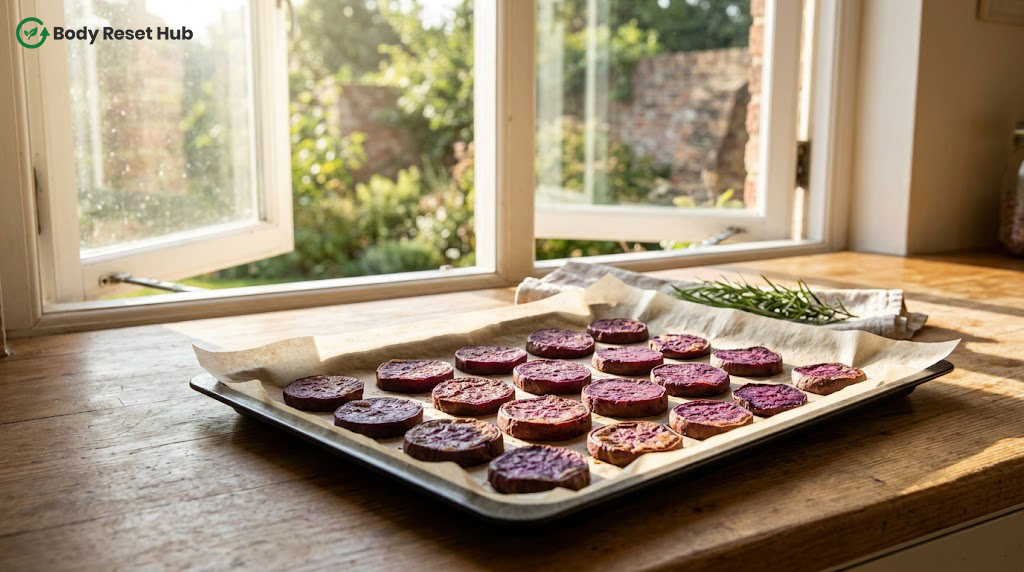
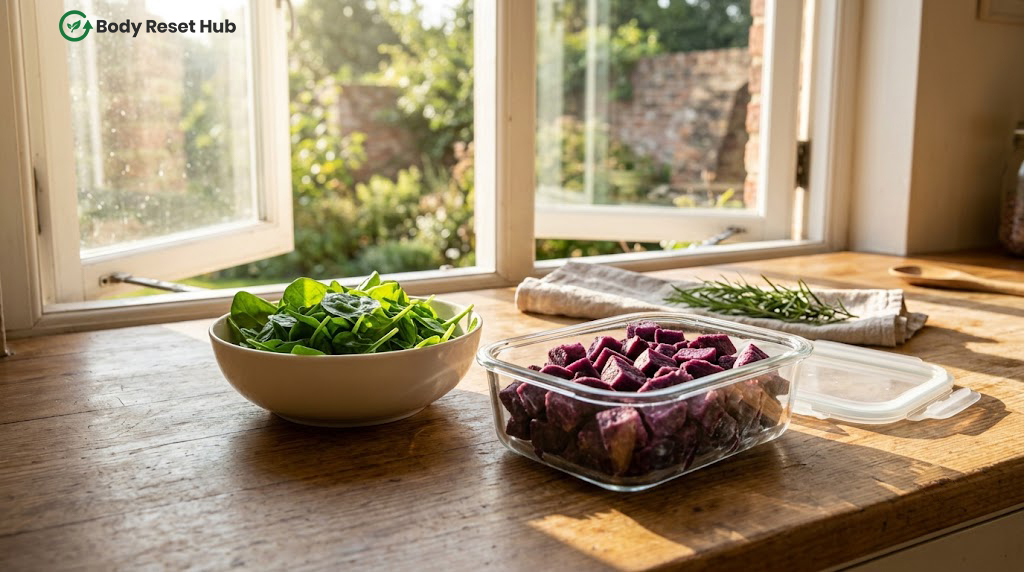
First, collect three medium-sized, firm purple sweet potatoes and wash their outer skins thoroughly under cold running water to remove all traces of garden soil, leaving the skin completely intact to preserve the high-fiber outer layer. Place the whole vegetables on a baking tray lined with fresh parchment paper and roast them in your oven at 200°C for exactly forty minutes until a wooden skewer can pass easily through the dense centers. Take the hot tray out of the oven and leave the roasted sweet potatoes to rest on your open wooden kitchen table for one hour until they reach normal room temperature. Next, use a sharp knife to cut the cooled vegetables into thick, clean round slices, transfer the pieces into a sealed glass storage jar, and place them inside your refrigerator to chill overnight for at least twelve hours. The next morning or afternoon, pull your portion of chilled purple sweet potato slices out of the fridge and enjoy them cool as a base for your lunch salad, or reheat them very gently on low heat if you prefer them warm, as the resistant starch structure will remain stable. This easy routine takes minimal active effort, completely changes how your system processes carbohydrates, and keeps your physical energy perfectly steady and sharp through your entire afternoon desk block.
Cooking Smarter and Enjoying Stable Body Balance
Changing how you handle and cool your cooked root vegetables will completely improve your physical stamina and keep you full of energy all day long. When you protect your daily routine with clean whole-food habits and safe starch adjustments, you will never have to worry about afternoon brain fog or sudden tiredness crashes after lunch again. You will find it easy to finish your daily tasks because your body is fueled with a smooth, continuous line of clean nutrients that keep you active and light in the background.
Real physical health does not come from tracking stressful modern diet fads or completely avoiding natural carbohydrates. It comes from these small, honest kitchen choices to use simple food preparation methods that match your body’s natural digestive tracking lines perfectly. By picking safe, natural starch cooling methods today, you give your kitchen routine the perfect plan to stay healthy, keeping your mind sharp and your life energized step after step.
If you are ready for a simple, beautifully organized list of clean plant recipes to improve your kitchen setup today, make sure to click right below:
Access The Complete Plant-Based Recipe Library & Comprehensive Nutritional Resource Template Here